

CCTV in Kenyan Schools: Safety Measure or Privacy Concern?
CCTV in Kenyan Schools: Safety Measure or Privacy Concern?
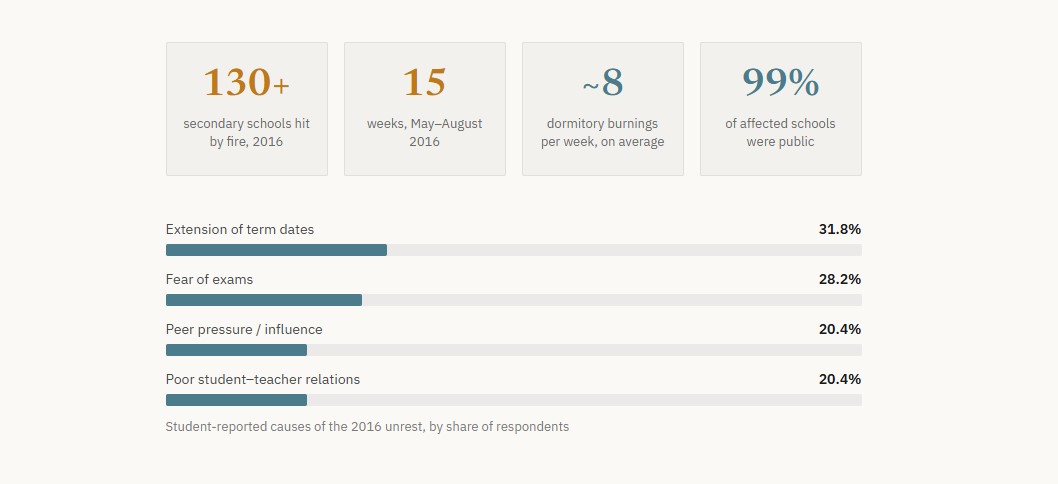
More than 100 schools. That’s how many were affected by fire across Kenya, in 2016 alone! All within a matter of weeks.
A pattern that spread from school to school
239 separate fire incidents. 244 other cases of unrest. Of the 282 buildings damaged, 228 were dormitories, the one place students were supposed to feel safest.
This was not an isolated event, instead it was a pattern that spread from school to school, and one this country has, painfully, seen echoes of since. It’s a reminder of just how much is at stake when it comes to keeping students safe.
Everything, all the time
The response, at the time, was almost instinctive: to install CCTV. Put a camera in every corridor, every gate, every place trouble tends to start, and let it watch what no teacher or night guard ever could. Everything, all the time. It was practical. It was fast. And in a moment when nobody had better answers, it felt like exactly the right one.
Ten years on: has this solution achieved what it set out to do?
The answer is mixed. CCTV has genuinely helped in places where footage that turned a “we don’t know what happened” into a clear, investigable answer during difficult moments. That matters. But unrest hasn’t disappeared in the years since. Cameras alone were never going to resolve what actually drives it; discipline breaking down, mental health going unheard, conditions that deserve more attention than they get. A camera can show what happened. It has far less to say about why.
A second, quieter concern
Now somewhere in the last decade, a second, quieter concern has emerged, one that has nothing to do with fire at all. The cameras that started in corridors didn’t stay there. In some schools, they’ve moved into the dormitories, spaces where, in many cases, there are no private cubicles at all. Just rows of beds, and now, in some cases, a lens pointed at them.
A tool installed for safety may also be capturing students in deeply personal moments. Nobody sat down and decided that was the goal. It just happened gradually, one camera at a time, until the original purpose and the actual outcome stopped looking like the same thing.
At what point does keeping students safe start making them exposed?
The Constitution has an answer, and it’s more precise than people often assume. The right to privacy includes the right not to have your personal space unduly observed. That right isn’t absolute; few are, but it can only be limited under clear, reasonable conditions. Any limitation has to serve a real purpose, be genuinely necessary, and go no further than it has to.
Which means “for security” isn’t, on its own, a complete answer. It’s the beginning of one. The rest has to explain why this much intrusion, in this particular place, was the only way to get the job done.
Two things follow from that:
Different rooms, same instinct
Zoom out, and this stops being a story about schools at all. It’s the same story every organisation eventually runs into. The retailer tracking how customers move through a store, the office monitoring keystrokes, the app quietly logging a little more than it needs to. Different rooms, same instinct: when in doubt, watch more.
Before flipping that switch, the better instinct is to slow down and ask:
The people who pushed for cameras in Kenyan schools in 2016 weren’t wrong to want their students safe. They were responding to a real crisis and a real need to protect the people inside these institutions. The cameras have delivered on part of that promise.
But the fuller story is this: technology was never the solution. It was only ever the tool. And a tool has no instincts of its own. It does exactly what the person holding it decides.
That decision is where the real story always was.
Author | Romer Services

Comments are closed.